Showing posts with label 21st Century School Leadership. Show all posts

Friday, May 15, 2026

Educators Should NOT Teach Students How to Use Technology with a Purpose: They Should Teach

Ed Tech advocates say, "We should teach students how to use technology with a purpose."

Do we teach students how to use a pencil, an eraser, or paper with purpose?

No, we don't start with the device, then teach students the ways in which to use the device; we start with the purpose, that which needs to be taught, not the device. The device is actually only relevant in its ability to serve the purpose.

If the device does not serve the instructional purposes, acccording to the judgment of the teacher, it has no place in instruction.

We also don't sit around inventing ways to use a pencil or paper in the classroom. We use them when they suit our instructional purpose, which comes first.

Education has gotten this wrong quite often in the past. We exchange our instructional purpose for the technology to achieve that purpose and spend all our time on the technology.

Too often, Ed Tech confuses the technology as the objective and the purpose.

Education should never be about teaching how to use technology with a purpose; it should be teaching and instruction as the purpose, and the technology might or might not help in that.


Thursday, May 22, 2014

Leading to Make It Safe for Creativity

"If we as leaders can talk about our mistakes and our part in them, then we make it safe for others." Ed Catmull, Creativity, Inc.: Overcoming the Unknown Forces That Stand in the Way of True Inspiration

Leaders are sometimes very stubborn people. They make mistakes, but then they spend an inordinate amount of time trying to conceal those mistakes. To some school leaders, showing that you are capable of making mistakes is revealing weakness. But, if you want to foster a culture of creativity and exploration in your school or district, you have to embrace your mistakes and display them. We display them by being open with candor with those we lead. By that very action, we demonstrate that trying and failing isn't the "unpardonable sin." As authentic leaders we must strive to make our mistakes public. We admit them; we learn from them. Creativity thrives within a culture that embraces failure as a product of experimentation.

A few years ago, when teaching my students writing, I emphasized repeatedly to them, that writing is about experimenting. It is about trying new combinations of words and ideas. I told them that means sometimes we write "drivel" and sometimes we pen words that inspire. But then I told them that "drivel" is a necesary part of writing. Just the same, mistakes are a part of leadership, and the wise leaders make them public. Authentic leaders that strive for creativity accept, acknowledge, and use failure, not hide it. We should always strive to make our mistakes public to those we lead. By doing so, we make it safe for others to be creative. Do you want your staff to approach problems and come up with creative solutions? Then perhaps you need to celebrate mistakes and failure through disclosure to make it safe.

Sunday, April 13, 2014

What Can School Leaders Learn from Pixar? Inviting Candor and Criticism to Be Creative

What does it take to create a “sustainable creative culture,” in an institution like public schools? The fact that many public schools exist just as they did a hundred years ago is an indication that they are often more about self-preservation than engaging in innovation. In other words, school systems are more often interested in work that is derivative rather than innovative. Not much is new in education reform because of this. It is a monumental failure to create a "sustainable creative culture" that could tackle some of our most serious problems in education today.

The pendulum metaphor is very familiar to most seasoned educators because they have seen reforms come and go and come and go, and most often these "reforms" are simply old ideas dressed differently. This pendulum metaphor persists because there's not really anything new in today's reforms; they are simply the old reforms or derivatives of old reforms. As Michael Fullan points out,
“If you’re in education long enough, you’re likely to get hit by the same pendulum multiple times." 
No reforms ever stick because we keep doing the same old things such as revising standards, chasing more difficult tests, or revamping teacher evaluations among many others. While this work is important, it isn't really reform. We aren't innovating because public education, schools and districts, aren't structured to innovate. They do not have sustainable creative cultures that foster innovation. We begin embracing innovation by developing what Ed Catmull describes in his new book, Creativity, Inc.: Overcoming the Unseen forces That Stand in the Way of True Inspiration, this “sustainable creative culture.”

According to Catmull, a most important ingredient in this creative culture is fostering a place where “people feel free to share ideas, opinions, and criticisms.” To create that culture, school leaders need to embrace “candor.” Candor is defined as the “quality of being open and honest in expression; frankness.” Candor, in other words, is inviting others to be open about their opinions, criticisms, and ideas. Sadly, public education, for all its calling for stakeholder buy-in is often more about defending and marketing someone’s pet reform project or idea rather than honestly seeking other educators' input or opinions. This is why that education pendulum continues to hit us multiple times. Candor is not invited and is often not allowed. If we really want to move education initiatives beyond the derivative to the innovative, then education leaders need be courageous and invite candor into their schools and districts.

How can school leaders invite candor into their schools and districts? Catmull offers an easy way to do that: You “institutionalize candor” so that it is part of the ritual and practice of the school. You can begin this by engaging in three simple practices.
  • Tear down the “top-down hierarchy” and top-down reform driven processes that currently exist, and stop trying to defend initiatives that, if they are so darn beneficial, they should stand up to criticism and candor on their own. Too often educational leadership is more about pushing and marketing ideas instead of approaching the problems we face in schools creatively. Instead, let’s subject all these educational initiatives to the full force of candor and criticism. If they survive intact, then they must be good. If not, then they weren't worth the paper on which they're written.
  • Invite straight talk as a rule. Nothing is sacred and off limits. Too often, those sitting in meetings are afraid to speak their minds because of the political consequences. It’s true! In public education if you get the reputation of speaking your mind, you are often defined as “not a team player” or worse. You are cast aside as an outcast and troublemaker. Educational leaders like to talk big about buy-in, and that they sought feedback, but some of them politically destroy those who don’t agree with them. Candor means you have the guts to listen to criticism and recognize when it is valid.
  • Bring people together often to discuss school or district initiatives for the purpose of straight talk. Educators, for the most part, are by nature passionate people who care a great deal about what they do. Encourage them to identify the problems they see and be entirely candid. School leaders must be willing to courageously listen and not resort to being defensive. Allow the discussion and criticism to happen instead of shutting it down. Be flexible and willing to revise accordingly, and possibly even let go. It should never be about ego; it should be about improving education for kids.
I wish that I could be as optimistic about the education reforms swirling about---Common Core, Technology, Testing, Accountability, etc. Sadly, I am not. Fundamentally, public education is still more about institutional self-preservation than engaging in creative approaches to the problems the system faces. If we’re going to move to sustaining a creative culture that can tackle 21st century issues, then we have to become courageous school leaders and invite candor into our schools and districts.

Wednesday, March 20, 2013

9 Characteristics of 21st Century Mindful School Leadership

“Mindfulness is simply noticing the way things are. By being mindful you can transform your life, your organization, and even your community. The first step is to transform yourself.” Maria Gonzalez, Mindful Leadership: The 9 Ways to Self-Awareness, Transforming Yourself, and Inspiring Others
“During difficult times,” writes Maria Gonzales, “anyone in a leadership position is scrutinized more closely. And it seems as if the demands of this new world order are beyond the experience of many who occupy leadership positions.” And, as Michael Carroll adds in Awake at Work, “Work with all its pressures and success and confusion, unfolds on its terms not ours, and we can be awake as if unfolds or we can resist---a choice we can make moment by moment for the rest of our lives.”

The pressures and challenges of leadership in 21st century schools and school districts is greater than it has ever been. Juggling dwindling financial resources, a myriad of new educational initiatives both state and federal, major curriculum restructuring, and the invasiveness of technology all make being a school leader today one of the most difficult jobs around. In midst of this confusion, the choice is simple: we can choose to be present, or as Gonzales points, “We can choose to be mindful." We can fight, resist, and ignore, and then find ourselves divorced from the reality that exists in our schools and school districts. Or, we can choose to practice being mindful, which brings us in tune with our reality. The answer for 21st century school leaders is cultivating what Gonzales calls “mindful leadership.”

But what does a mindful leader look like? Maria Gonzales’ “9 Ways of Being” provide an excellent portrait of “mindful leadership." Keep in mind though, it is through "mindfulness practices" that these characteristics are developed and fostered, which she also describes.

1. Mindful school leaders are present. Simply put, it means they exist in the now, in the present. They do not engage in undue worry about the past or the future. Their energies are directed toward the current moment. That does not mean school leaders do not plan. It means they do not obsess with those plans, and they are not so attached to those plans that nothing else matters.

2. Mindful school leaders are aware. They are aware of their own inner life. In other words, they are skillful in the art and science of emotional intelligence. They know themselves. They never feel themselves overtaken and blindsided by their own emotions. Mindful school leaders know who they are, inside and out, and are not deluded into thinking more of themselves than they should.

3. Mindful school leaders are calm. They don’t panic. They face trying circumstances with control. Mindful school leaders act with centeredness and authenticity at all times. Their calmness is a natural part of who they are.

4. Mindful school leaders are focused. They “channel resources to accomplish priorities.” They concentrate on what’s important. Mindful school leaders know what's important and they zero in on that.

5. Mindful school leaders are clear. It is this clarity of mind that makes it possible to make the best decisions. They understand their own motivations and why they do what they do. They, as Gonazales aptly points out, “know what is important.” Mindful school leaders exhibit a clarity of mind that fosters quality decision-making.

6. Mindful school leaders are equanimous. This is the ability to accept things as they are, not in the spirit of resignation, but simply to be at peace with reality. They do not spend time fighting fruitless battles. They do not engage in unrealistic expectations. Mindful school leaders are at peace with their reality.

7. Mindful school leaders are positive. They are a “positive force” in their schools or school districts. They understand leadership means serving others. Because of their positivity and service to others, they inspire those around them. Mindful school leaders act and live in affirmation and are an inspiration to those they serve.

8. Mindful school leaders are compassionate. They deeply care those around them. They know and understand and engage in self-compassion too, because taking care of self is important too. Mindful school leaders act with compassion, not in self-service and self-promotion.

9. Mindful school leaders are impeccable. As Gonzales points out, they aren't perfect, but mindful leaders act with integrity, honesty, and courage. They accept responsibility for what they do and do not blame others for honest mistakes. Mindful school leaders always act with integrity, honesty and courage when leading their schools or districts.


In the education tumult of the 21st century, School leaders, more than anyone, need to be mindful. The challenges we face are only increasing, not lessening. As Maria Gonzales states, “Mindfulness can help leaders remain focused on what really matters to them and to their companies and stakeholders.” I submit that mindfulness helps school leaders remain focused on what it really important: our students.

Note: To learn more about fostering "mindful leadership" I suggest Maria Gonzales' straightforward, non-religious treatment of the topic  in her book, Mindful Leadership: The 9 Ways to Self-Awareness, Transforming Yourself, and Inspiring Others.

Tuesday, July 10, 2012

21st Century School Leader’s Guide to Creative and Innovative Schools

“Innovation? We don’t want no stinking innovation,” would perhaps accurately describe many of our educational institutions, including K-12 public education organizations. We’ve all worked in those schools and districts where rules, policies, processes, and procedures mattered more than the people. These same schools literally fight to preserve “the way we do things” to the point of exterminating any thoughts of doing things differently. Then we wonder why our particular schools or districts fail to be innovative.

According to Ken Segall in Insanely Simple: The Obsession That Drives Apple’s Success, “When process is king, ideas will never be.” Segall’s assertion is that Apple’s success is based on a company culture where creativity is recognized as vital to the organization. While I recognize the limitations of forcing business thinking on a for-purpose organization like public schools, it does not stop me from asking the question, “Why can’t we create schools where people and ideas matter more than rules, policies and procedures?”


According to Segall, the problem most companies face is that “their processes have become so institutionalized, they’re incapable of altering their own behavior---even if the benefits of the change are staring them right in the face.” As a 20-plus year veteran educator, I can't count how many times have I run head-on into policy, procedures, and rules when wanting to try something innovative and new. These “institutionalized ways of doing things” were thrown into my face by well-meaning administrators and colleagues, but the effects were, “You’re out of line to suggest such things, so get with the program."

Over the course of my career, this “institutionalized-barrier to innovation and ideas” has manifested itself many times, and over the course of years, if you're like me, you eventually become tired of fighting the system, so you just do what you're told, how you’re told to do it. You then pass this same institutionalized-thinking to your students with the admonition that we're told to do it this way, so get used to it. In the end, nothing is changed, because the school culture is one where innovation and new ideas are quickly stifled.


But things do not have to be that way. As Ken Segall states:
“You can build an organization that recognizes the needs of creativity. You can become a steward of creative thinking and become its greatest advocate. You can become skilled in recognizing when a process is more likely to kill a good idea than it is to promote it.”
There is hope that 21st century school leaders can foster in their schools and districts the kinds of cultures that value and cultivate creativity and new ideas. Our schools can become the kinds of institutions that make creativity and innovation a priority, which is vital to their survival as 21st century institutions.

What then can we do as school leaders today to perhaps begin to shape our schools and districts into cultures where ideas and innovation really matter more than rules, policies, processes and procedures? Perhaps here's some starting points for answers to that question.
  • Audit your school culture with your entire staff and see where your school or district lies within the continuum of institutionalized creativity and innovation. Use surveys, informal conversations with all stakeholders, and intense self reflection as your tools to find out if “Your school is one where processes and procedures matter more than creativity and new ideas." This is an attempt at honest reflection and data gathering, but keep it simple. It will start the conversation about how your school and district really values creativity and innovation. Schools that have heavily institutionalized barriers to creativity and innovation will find those barriers rather quickly, but they will be harder to modify or dismantle. Those schools that have more subtle blocks to creativity and innovation will have a more difficult time finding those issues, but might have a stronger basis to start with. Simple, honest, self-reflection is the starting point of finding whether your school or district stifles creativity or innovation or whether it values it.
  • Once the institutionalized barriers to innovation and creativity have been identified, look for ways to change, modify, work-around, or remove those barriers. I am not speaking of violating policies or breaking laws. As a school leader in 21st century schools or districts, we must become skilled at dealing effectively with those things within, and without, our organizations that prevent innovative and creative thinking. Sometimes, changing a policy or procedure is as simple as re-writing it. Other times, we may have to fight before school boards, legislatures, and politicians to change those onerous regulations that are major stumbling blocks to innovations. Other times, we can find ways around these barriers that allow for the creativity and innovation we seek without breaking the law or violating policy. School leaders have to have to courage to challenge the status quo, and of course the graciousness to realize when they’ve lost, and determine to fight the battle again on another day. Those barriers preventing teachers from being creative need to be dealt with, and courageous 21st century school leaders do just that.
  • Become the caretaker of innovation and creativity in your school or district. This means keeping an eye out for innovative solutions and ideas. It means recognizing those when they happen and making sure those innovations and creative ideas are carefully cultivated and protected. It means being ever vigilant that creativity and innovation are valued within your school organization and that institutionalized practice does not hinder these things.
It has been pointed out many times that schools and school districts are notoriously resistant to change. Creativity and innovation are often not valued and many schools and school districts actively stifle those things. It is important that 21st century school leaders do not find themselves on the side that protects rules, policies, and procedures at the expense of people and ideas. True 21st century leadership begins when there's a willingness and courage enough to be advocates for innovation and creativity.

Sunday, June 24, 2012

Are You a True 21st Century Leader? Importance of Courage and Character

"Courage trumps authority. It even trumps physical violence," writes Gus Lee in his book entitled Courage: The Backbone of Leadership.


There is no doubt that courage is central to leadership, and Lee's book emphasizes that over and over. At one point in the book, Lee describes a class he once had with Major H. Norman Schwarzkopf, the future general,  as his teacher. Schwarzkopf gave the class this scenario:

"Imagine that you and your troops for which you are responsible are on an international border. The enemy can cross it and strike at you with impunity. But you can't cross the border. That order comes from the commander in chief. Every night, the enemy crosses the border to kill and wound your men, who are Vietmanese Airborne volunteers in your care. Every night, you chase the enemy, but they escape at the border, where you stop, as you are ordered. Here's the question: when the enemy hits you again tonight, do you pursue them over the line? Or do you follow orders and halt at the border?"
Lee goes on to describe the questions asked by the students clarifying the scenario. If they cross the border, they can destroy their enemy and stop their men from dying, but if they cross the border, they violate an order from the Commander-in-Chief. Schwarzkopf goes on to ask his students to write about the experience and then polls them to find out which students would stop at the border and how many would pursue the enemy across the border. Lee says he chose to stop at the border because he had to follow orders.

Schwarzkopf then tells them, "There are two kinds of people in the world: leaders and careerists. Leaders have character. They act for what is right. They would die for their men. Careerists are self-centered, self-absorbed. They act out of selfishness. They sacrifice their men for a promotion. They lie to pump up results.They save their skins instead of others'. Careerists can't really lead because their men do not trust them and will not willingly follow."

"The correct answer for a leader is clear. You cross the border. You destroy the enemy to protect your men. You then take personal consequences to your career, knowing that you violated an order but acted for what is right. You feel pride in getting court-martialed and being reduced to private. Everyone's a leader or isn't. It's not rank. It's character."

I can't help but be moved by this story. I was when I read it. I am also equally moved by the question asked about whether I am leader or a careerist. How many of us become more concerned about our careers than for what is right? I happen to believe strongly that leadership is about character and integrity, and I certainly hope I'm not a careerist.

Courage: The Backbone of Leadership

Sunday, May 20, 2012

4 Social Media Listening Strategies for 21st Century School Leaders


In their book Why Social Media Matters: School Communication in the Digital Age authors Kitty Porterfield and Meg Carnes argue that for school leaders to use social media effectively, they not only use it to communicate out information, they must also engage in listening to what stakeholders are saying.

"Listening online gives leaders insight into their communities in a way that face-to-face meetings and surveys do not."

It is through social media that people sometimes reveal their true feelings. If they do not think you are listening, they may say things quite unlike those occasions when they think you are. Using social media to listen to what your stakeholders are saying is another way for you to get in touch with what they really want. To do that, Porterfield and Carnes suggest establishing a listening strategy for your school or district. So how does one establish this? Here's some suggestions I've paraphrased from their book, Why Social Media Matters: School Communication in the Digital Age.

  • Decide how much time will be spent listening. Will it be once a day? Once a Week? Portfield and Carnes suggest that school leaders need to listen to their school or district's social media channels at least once a day. If a crisis occurs, obviously it will be necessary to listen more often. For example, during a contentious school board decision or during a well-publicized event involving a staff member or student, listening to social media channels needs to be much more often than once a day.
  • Designate personnel who will do the listening and report back to administration. These individuals are charged with the task of listening to your social media channels. Large districts can perhaps charge their communications teams with these tasks. Small districts may have to select current district staff to serve on a listening team.
  • Portferfield and Carnes suggest developing a "Social Media Collection Tool" to report out what was found from listening. This gives the district or school a physical record of what others are saying on social media sites. School leaders need to have a record of what conversations are occuring about their schools or districts, and this tool satisfies that need.
  • Develop a plan on how the school or district will respond to what is heard on social media. School leaders need to evaluate the influence level of those engaging in conversations on social media. Answers to such questions as the following are also important: How will you respond to inaccurate or incomplete information being shared about your school or organization? What offical media channels will you use in your response if you decide to do so?
The perception that most school leaders seem to have of social media is a tool for making announcements to their stakeholders rather than a means to engage that same group in larger conversations about how we're doing our jobs. It is imperative that 21st century school leaders establish a social media listening strategy for their school or district in age where people are talking about us through social media whether we're listening or not.


Next Up: Social Media Listening Tools for 21st Century School Leaders

Sunday, March 25, 2012

4 Reasons 21st Century Administrators Should Get Out of the Way and Let Students Blog

As a twenty-first century administrator, and a former English teacher, I believe in the power of blogging. There's satisfaction that comes from writing and having others read it. That is fundamental to every rule of composition. So much do I believe in its power, I am excited that students at our school are blogging and excitedly talking about the experience. Once we were able to rescue Blogger from the clutches of the content filter, several of our teachers now have students engaged in blogging as a part of their classroom experience. It's writing 21st century style. Here's 4 reasons to get students blogging for those administrators who still hesitate.

  • Blogging gives students an opportunity to engage a real audience. This became evident this past week when one of our students excitedly came into my office just to tell me about individuals from a European country who contacted her because of her blog. I can't say in 16 years as an English teacher I ever saw one of my students get that excited about an essay they'd just written. Blogging gives students an opportunity to engage in real writing with a potential real audience, an English teacher's dream!
  • Blogging gives teachers and educators a real context for teaching them how to effectively engage others with writing and media. No one sits around reading essays except English teachers, and I say that as a former English teacher. Trying to engage an audience in an essay isn't real. Trying to get others to read and comment on your last blog post is real. Blogging is an environment that gives students the opportunity to experiment and try to see what works with readers, and the feedback is real too.
  • Blogging gives us (all educators) a tool to teach students to contribute responsibly to the web conversation. In the context of blogging, educators can teach students how to engage readers and engage with the right level of disclosure. Teachers can teach students how to blog safely as well as effectively. In other words, if we want students to blog safely, then we have to give them the opportunity to blog.
  • Blogging provides an environment for students to reflect on learning. Sure, reflection can be done in a journal, but journals are at best written for an audience of 2, the student and the teacher. It's in the context of a blog that students can test out what they are thinking with others. The reflection is expanded with feedback and comments. Blogging allows for interactive reflection.
Just to give you some idea of what our students are doing with blogging, here are some of our students' blogs. Some are for an AP US History class. Others are a part of their senior projects. They are doing what a 21st century administrator would be proud of. I obviously do not include their names here, but I can't help but share them with you. 


It is time for 21st century administrators to move beyond the fear of students engaging in blogging. Blogging is an opportunity for students to engage in real writing for a real audience. It is an authentic activity that has the potential to bring real learning to the classroom.

Tuesday, January 10, 2012

Advice for the New Administrator & Educator Using Social Media

During a conversation today, I was asked, "What advice would you give to the new administrator just beginning to use social media in his or her new role?" Becoming an administrator is a challenge in itself, which means there are enough issues to deal with without making mistakes using social media. Added to these challenges is the fact that most often new principals or assistant principals are left either with no mentor, or the mentor they have probably doesn't know a great deal about technology in general much less social media. This means the novice administrator is often left to her own devices when it comes to engaging stakeholders in social media.

As an administrator and experimenter with social media for most of the last six years, I have learned a few things about it, mostly by trial and error but also from others. Right now, I would place these five suggestions at the top of the list for new administrators and educators engaging in social media use in their new roles.

1. Think before you post. There is a bit of common sense in this suggestion, but with all the news stories about educators getting into trouble because of some careless posting on a blog or on Twitter, it is certainly worthwhile to repeat and emphasize it. Crafting a social media message for your school or district should be a deliberate process. Careful thought should be put into Twitter statements or Facebook posts. Reading the post from the perspective of your reader or the community is vital. That Twitter message might only have 140 characters, but a lot of damage can result from those characters if worded improperly.

2. Know the limitations of social media. Social media is an excellent way to engage stakeholders, but it isn't always the best way. It is vital that you take time to think about the message and whether the message you want to deliver is suited for your school's Facebook page or a Twitter post. Some announcements still might need to be made through your school's automatic phone messaging system or through a meeting with your parents. Social media is a relatively easy way to deliver a message, but it can leave a lot of room for interpretation, and there are times when all that interpretation is not wanted.

3. Be aware that you may still have to use a blended approach to communication that involves using social media and other media too. It has been my experience that not all parents are plugged in yet. This means I have to make sure stakeholders that aren't using social media, get the message too. Also, it might mean we also have to provide training for parents and community members too so that they can get plugged in and receive the benefits of being connected through social media.

4. Make sure the message fits the medium. This is an old time adage about communication in general, but in some ways, social media is much more powerful, and that means that not everything that needs to be said needs to be done through Twitter or Facebook. Delivering bad news or serious news is probably best left to the older media such as phone messaging systems or even a more formal press release. Be careful of trying to communicate sarcasm or humor. These don't often translate well in social media.Administrators and educators would do well to be very careful with making sure media and message are the best match.. After all, as Erik Qualman, author of the book Digital Leadership writes: "Keep in mind there's no hiding from anything in the new digital world. Your best course of action is to assume whatever you post will eventually be seen by millions." Post only those things you wouldn't mind your mother seeing.

5. Set up school-based and personal-professional social media accounts separately. If you are going to be communicating with others as your own agent, then you need a separate account. Any accounts set up with the name of your school implies that your are speaking as an agent of the school. Whether it is a Twitter account or a blog, if you give it the appearance that you are speaking in your role as principal or teacher, then any posting that you do may be perceived as posts from an agent of the school or district. By having separate accounts, there is no implied relationship. Still, even with separate accounts, it is important to think and post prudently.

Being an administrator is a challenging job and using social media effectively can mitigate some of those challenges. That means engaging in social media in effective ways. New administrators and educators can take advantage of the power of social media by keeping these suggestions in mind.

Wednesday, December 28, 2011

3 New Year’s Resolutions for 21st Century School Leaders

As 21st century school leaders, the New Year gives us the opportunity to declare the direction we are going to move as 21st century educational leaders in our schools and districts. While there are certainly other areas to consider as we make New Year Resolutions as school leaders, here's three I consider imperative.

Social Media
In the coming year, it’s time to begin a genuine examination of the place social media has in your professional life and practice. Maybe it’s time to quit thinking narrowly of all the negatives that can happen when educators engage in social media use, and begin to look at potentials. Social media is here to stay in one form or another. It is time to move beyond trying to find ways to keep social media out, and engage in its use and encourage others to do the same. It’s time to quit wasting energy trying to keep social media out of our schools and embrace it as just another way to engage our students, parents, and community.

WiFi Access for Students
As bandwidth has become more available, it is time for us to look for ways to provide WiFi access for our students. As 21st century leaders, we need to provide an environment where our students and staff can remain plugged-in and powered-up rather than unplugged and powered-down. We need to make it a priority to find ways to give our students WiFi access within our school buildings and connectivity with their own devices. It takes a special, creative, 21st century leader to provide this access, keep our students safe, and teach students how to connect responsibly.

Explore and Move to the Cloud
One of our goals as 21st century leaders is take the limited resources we have, and provide the most with those resources. The cloud provides us the biggest opportunity to do that. The 21st century leader fearlessly explores cloud-based services and opportunities. Allowing Google to maintain email services or Microsoft maintain Office apps online is the future. We have a responsibility as 21st century leaders to deploy our resources in a manner that makes the most sense, and that gives us the biggest return for our investment. This school year, all 21st century school leaders need to commit to exploring the possibilities of cloud-based solutions and engage in their use whenever possible.

Being a school leader in 21st century schools is exciting. There are so many opportunities to for our own growth and exploration. As you make your New Year's resolutions, what areas would you add to this list for 21st leadership resolutions?

Thursday, December 22, 2011

The Oft-Ignored 21st Century Leadership Skill for School Leaders

There is one 21st century leadership skill very few have considered: managing and monitoring a school or school district’s online reputation. Most of the time, administrators are in “reactive” mode when it comes to sudden, unwanted attention to their schools brought about due to some online Web posting to a blog or social media. This often means the damage is  already done way before they were even aware that there was a problem. It is the 21st Century School Leader who uses technology to monitor their school or school district's online reputation.

Authors Andy Beal and Dr. Judy Strauss write in their book Radically Transparent: Monitoring and Managing Reputations Online, “There’s a conversation about you online right this minute and you are probably unaware of its contents.”  This truth extends to schools as well. We have constituents posting and talking about our schools online . In fact, because our constituent groups probably among the highest users of blogs, YouTube, and social media sites, we are perhaps even more likely to have people engaged in “conversations” about us online. That makes monitoring what our students, parents, teachers, community members are saying about us even more important.


While we can’t control what people say about us online, we can monitor it and perhaps proactively address it when it happens. In the book, What Every School Leader Needs to Know About Digital Technologies and Social Media, Will Richardson and Karl Fisch write, “Among the myriad duties most school administrators have is reputation management, keeping an ear to the ground to stay apprised of issues that concern their school community and intervening when necessary.” This task can be monumental considering the massive amount of information being published on the Web daily, but here’s 4 suggestions school leaders might use to keep at eye on what is being posted and published about their schools or districts online.
  • Set Up Google Alert for Mentions of Your School or School District: Google Alerts is a simple, free tool from Google that allows you to monitor specific search words and have the results delivered to your email inbox or to your Google Reader. (Here’s help for those wanting to learn how to set up Google Alerts.) With Google Alerts you can monitor Web Content, News Items, Blogs, Video, and Groups at the same time. You simply enter the name of your school or district into the alert, and Google will deliver the results to your email inbox or to your Google Reader. In theory, if someone published an article or blog post that mentions your school or district, you will receive a link to that post and be able to review it yourself.
  • Use Google Search to Capture Key Words Related to Your District and Subscribe to That Search as RSS Feed:  This strategy works in much the same way Google Alerts does, but the difference is you enter your school or school district name into Google Search and subscribe to the results in your RSS Feed reader. You only need to check your reader when new results are delivered. This allows school leaders to monitor using Google's powerful Web indexing to listen for specific mentions of their schools or districts.
  • Conduct a Search in YouTube for Your School or District and Subscribe to That Search in Your RSS Feed Reader: Just like the other tools, this one delivers those search results to your RSS Feed Reader. It is important to be sure to subscribe to variations and other nicknames of your school.  When someone posts a video somehow tied to your school, you will be notified through your RSS Feed. When I used this search, I immediately found a couple of videos created by students at my school. Though they were harmless, and actually quite creative, I am glad to know they're there.
  • Use the Search Tool IceRocket.com to search blogs, the public Twitter stream, Facebook, images, and the general buzz about your school or district. This one is new to me. It is basically a search engine that allows to search for words or phrases in blogs, Twitter, Facebook, images, or elsewhere. I searched for a local high school using this tool and got immediate returns in all these categories, including recent Tweets and Facebook posts. You can check out IceRocket for yourself at http://www.icerocket.com.
As our schools and districts move further into the 21st century, it is imperative that our school leaders develop the skills to manage and monitor their schools and school district’s reputation online.  There was a time when word-to-mouth talk about a school was limited to the local community. But as Beal and Strauss indicate in Radically Transparent, “Word-of-mouth was previously spread among friends and families, but now extends across continents to the masses with a click of a mouse.” Furthermore, “Social media are like word-of-mouth on steroids.” Today, what people are saying about our schools is not limited to local chatter, but extends globally. As 21st century school leaders we must listen to what our constituent groups are saying about us in our community, but also what they are saying about us online too.

Thursday, December 15, 2011

5 Indications Your Leadership Is Obsolete for 21st Century Schools

In October, I posted “Top 10 Signs Your School Is Caught in a Time Warp: List for School Leaders.” Of course the whole idea behind that post was to call attention to those leadership proclivities that are actually hindering movement toward a 21st century learning environment.

Now, let me be just a bit more direct in this post. Here’s the list of indications that your school leadership is obsolete and in need of a big upgrade.


1. You actually find yourself defending school policies that ban the use of cell phones in your building. Cell phone bans need to go the way of the slate and chalkboards. Instead of prowling the halls to catch students with cell phones out, how about getting students to use them constructively? Besides, if a cell phone disrupts class, it is the user that actually disrupts the class, not the phone. Cell phone bans are a waste of administrative energy and time.

2. You defend adamantly the use of Internet filters on your school networks. I know all about the CIPA compliance issues and all, but perhaps your leadership is just a bit outdated and your knowledge of computers inadequate if you actually think filters work. Let’s face it, most districts put filters on their networks, not because they work, but because they allow them to keep their funding. If you really want to know whether your Internet filters are working, just ask a student. The smile on their face says a great deal. Heck, some of them might even show you one way they use to get to Facebook even though it’s supposed to be blocked.

3. You brag about the number of computers, smartboards, or iPads you have in your building. I have to point the finger to myself a bit on this one. It’s darn hard to resist boasting about your computer-to-student ratio when a fellow administrator brags about his, but the truth is, it really doesn’t matter if you have 3 computers to every student if no one is using them effectively for learning. Administrators have historically boasted about needing an iPad for every student or a laptop for every student. I’ve even heard school principals boast about having Smartboards in every classroom. Truth is, it’s not the numbers that matter; it’s what students and teachers are doing with those devices that matters.

4. You see Facebook and other social media as one of the biggest menaces of modern society.  Granted, I will admit I’ve dealt with enough “Facebook-connected issues” that I sometimes think “Zuckerberg” should be a bad word. But, social media is our reality; it’s our students’ reality. We can’t keep blocking it out with the hopes that it will go away. It will, in some form, outlast us all. Instead, let’s figure out some way to use social media educationally. We all might learn something.

5.  You think learning occurs only within the confines of your building’s classrooms under the direction of your teachers. Our students are learning about things they care about in spite of us. Classrooms are not the only places where student curiosity is satisfied (if they ever were). Our students are engaged in massive learning on their own while sitting with digital devices wherever they happen to be. It’s time to measure learning by something other than seat time and length of class periods. Perhaps we could even figure out a way to channel all that energy to learn to accomplish our educational goals.

School leaders suffering from “obsolete leadership” really do prevent schools from becoming 21st century learning places. Perhaps someday we’ll quit trying to defend the rules and question why the rules exist in the first place. That said, I am positive there are others indicators that could be added to this list.

Sunday, December 11, 2011

My 11 Favorite Chrome Browser Apps and Extensions

NOTE: I CAN NO LONGER RECOMMEND EVERNOTE TO USERS. SINCE ITS ACQUISITION IN 2023 BY BENDING SPOONS, THE PRODUCT HAS BECOME RIDDLED WITH BLOATWARE AND NOT USABLE AS IT ONCE WAS. THERE ARE BETTER PRODUCTS AVAILABLE FOR NOTE TAKING.

I have not hid the fact that Chrome is my browser of choice, and from the looks of articles like this one, “Google’s Chrome Browser Surging Past Firefox”, it looks many more are beginning to choose the browser as their favorite. One of the features of Chrome that I like are the extensions and the Apps that can be downloaded and used.

Chrome Apps Page
For those not familiar with Chrome extensions and Chrome apps, the difference between the two is that Chrome Extensions run within the browser window from a button located in the upper right hand corner and a Chrome app is an application that runs in its own browser window, usually accessed through an icon on the apps page within the browser. While Firefox offers its users the same experience, I have grown to appreciate the reliability and functionality of the many apps and extensions within my Chrome browser.

While I have posted my favorite Chrome Extensions and apps before, my list of favorites has changed a bit since then. Here's my latest.

Quick Note: Quick note is another one of those apps that make it possible to be paperless. With Quick Note, users can quickly add and edit notes. Notes that are added are fully searchable, and if you have a Diigo account, you can sync those notes to the cloud. That means you can use Diigo’s Web and sharing capabilities to both access your notes and share them with your Diigo groups. Those developing the app indicate in the Chrome Web Store they may integrate the app with other Web tools like Evernote and Dropbox in the near future. Quick Note is a simple to use note taking tool located right in  your browser.
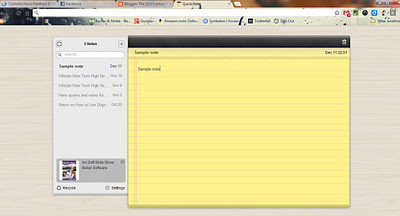
Quick Note
Kindle Cloud Reader: About eight months ago, I became an avid e-book reader. I own two Kindles, and I have the Kindle app on every PC I use and on my iPad. I even have the Kindle app on my Android phone. With the Kindle Cloud Reader, I can access my growing Kindle e-book library even on machines that do not have the Kindle application installed. In addition, the Kindle Cloud Reader has a sleek interface and is so easy to use, there are times when I simply use it to read my books. Currently there are three things I wish I could do in the Kindle Cloud Reader that I can’t do: 1) Highlight text, 2) Enter reading notes, and 3) Access my newsstand items. I can see text I’ve highlighted in other Kindle Apps, but I can’t highlight. Also, there are times a thought occurs to me while reading, and I love being able to attach it to the text. As far as accessing my Newsstand items? I would love to be able to check out my newspaper and magazines from the Kindle Cloud Reader too. Still, reading from the Cloud Reader is a pleasant and easy experience.

Kindle Cloud Reader
Read Later Fast: I’m just learning about the power of this app. I’m always stumbling across a Web article that I just don’t have time to read. With this app, I can post an article to my Diigo account for future reading. I can even include the graphics. Read Later Fast integrates entirely with my Diigo account and adds another level of flexibility to an already versatile web tool. I can open these Web articles using this app and read according to my schedule.
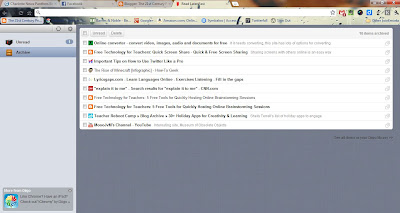
Read Later Fast
Offline Google Mail: This app basically gives me an interface for my Gmail account and allows me access email offline. You can also compose email which is stored and later synced with the Web. Offline Google Mail is an excellent email client right in your Chrome Browser.
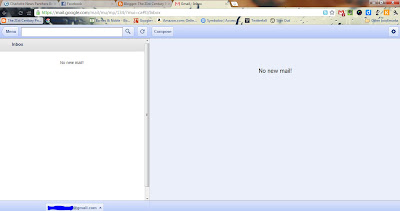
Offline Google Mail
Tweetdeck: Tweetdeck also has a Chrome app as well. This app works pretty much like the separate Tweetdeck app. Twitter recently updated this interface to look exactly like its desktop Tweetdeck app. Twitter users will find this app works as well as the other Tweetdeck products.


Here is a list of my favorite Chrome Extensions.

Evernote Clearly: This extension takes a blog post, article or Web page and transforms it into an easy-to-read format and then places it into your Evernote account. That means you can later access these articles with any device running an Evernote app. This is one of the must-have Chrome extensions. I was even able to convert an article to a PDF and send it to my Kindle to read there.
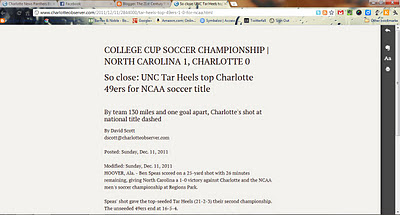
Evernote Clearly Interface
Diigo Toolbar: This extension is one of my most used. I have posted about it before. It allows users to highlight, bookmark, add a sticky note, or share a web page with basically the click of a button. Diigo users will love adding this tool to their browser. An excellent extension that adds even more functionality to your Diigo account.

Diigo Extension Toolbar
Awesome Screenshot: This tool allows users to take snapshots of Web pages and the screen, annotate them, then save them either on the desktop or into your Diigo account. This is a very useful extension for capturing graphics for later sharing. It is also another extension to add functionality to your Diigo account.

Awesome Screenshot
Evernote Web Clipper: There are many times I stumble across a Web page that I might want to share or use later. The Evernote Web Clipper allows users to clip those pages and place them directly into one of their Evernote notebooks. This extension adds functionality to your Evernote account.

Twitter Share This Page: There are quite a few times I find a Web article that I just have to Tweet out. This extension puts a button in my Chrome browser that allows me to do just that. When I find a page to share with my PLN, I can click on this button, edit the outgoing message and just Tweet it out. URL’s are automatically shortened too. Must have extension for Twitter users who use the Chrome browser.

Send to Kindle: This extension allows users to send any Web content they find to their Kindle for later reading. For example, suppose you stumble on an article of length that you would like to spend some time reading later. You can use the Send to Kindle extension to put it on your Kindle.

As more and more Chrome apps and extensions become available, my favorite list grows. Chrome apps and extensions are ways to get the most out of both the browser and your favorite Web tools.

Saturday, November 12, 2011

21st Principal’s Big List of Must-Have Administrator Tech Knowledge

NOTE: I CAN NO LONGER RECOMMEND EVERNOTE TO USERS. SINCE ITS ACQUISITION IN 2023 BY BENDING SPOONS, THE PRODUCT HAS BECOME RIDDLED WITH BLOATWARE AND NOT USABLE AS IT ONCE WAS. THERE ARE BETTER PRODUCTS AVAILABLE FOR NOTE TAKING.

Just the other day, I was asked, “What 21st century tools would you say every administrator needs to know and understand how to use?” It’s an important question, and I think I have tried to answer that question continuously through this blog.  While there are the technological tools that help with administrator’s duties, there are other tools administrators need to know and be able to use simply because of their potential impact on instruction.


This first list describes some of the "tech-knowledge" I think administrators need to have to understand technology as it exists today, and the direction in which it is going. Here's a list of what I consider to be important 21st century administrator general technology knowledge and abilities.
  • Use and understand cloud-based applications: With so many of our school functions moving to cloud-based applications, administrators need to understand what the cloud really is, what it means for data, and how to use cloud-based applications to enhance educational initiatives. There should never be an administrator who asks, “What’s this cloud they keep talking about?”
  • Use and understand social media platforms: Instead of giving in to fear and trying to find ways to limit access and use of social media platforms by educators, 21st century administrators need to be engaged heavily in the use of these platforms to both promote their educational organizations and to communicate with stakeholders.
  • Subscribe to RSS feeds: While there are fewer options for engaging in following RSS feeds, it still is one of the best ways to mine the information morass on a daily basis. Using a feed reader allows an administrator to be more selective in both information sources and in the amount of information they have to sift through to stay current professionally and personally.
  • Use web platforms to post information and communicate with stakeholders: Being able to engage in communicating with others in a cyber-environment is a must for 21st century administrators. To really be able to take advantage of the cyber-media, administrators need to be able to understand its intricacies and quirks. They need to be able to take advantage of its features. This means being able to engage in effective 21st century communication.
Web 2.0-Cloud Tools: If I were to select specific Web 2.0-Cloud tools that administrators should know how to use, here’s my not-so-short list.
  • Evernote: This is a note taking and Web collection tool. It has both web and desktop applications and a premium version that can be obtained at low costs. http://www.evernote.com/
  • Diigo: Diigo is a social bookmarking site. With its tools,  the administrator can share 21st century information and tools with staff and others. It is also an excellent way to share notes too. It is a collection tool too, just like Evernote, but its sharing ability makes it more of a collaborative tool. http://www.diigo.com/
  • Dropbox: Dropbox is a way to get to rid of the need to use flash drives. It is the easiest way yet to store files online and access them with any device. It is also an easy way to share files too.  http://www.dropbox.com/
  • Edmodo:  Edmodo is the premier social classroom environment. It is an easy way to engage with others in a social, cyber environment. http://www.edmodo.com/
  • Engrade: This is one of the simplest to-use online gradebooks I’ve found. It allows administrators to access student grades, and parents too. A few added features like online quizzes and flashcards make it even more useful. http://www.engrade.com/
  • Google Reader: This is one of the easiest to use RSS feed readers. Google reader allows users to bring what they want to know to their desktop. www.google.com/reader
  • Google +: Google + is relatively new, online social media environment. It allows users to connect synchronously and asynchronously. It is also possible to organize those you communicate with into circles which are groups. https://plus.google.com/
  • Google Apps (Email, Calendar, Google Sites, Google Docs): This collection of apps only get more and more powerful. Users can also engage in real-time collaboration with these tools.  http://www.google.com/apps/intl/en/edu/
  • Twitter: Twitter is a most used microblogging website on the web. Tweeting out information in 140 character bursts are the norm. http://twitter.com
  • Facebook: You have to have been living in a cave lately to not have heard of Facebook. I include this one on the list because administrators need to both learn how to use it and understand it. Too often it is being banned and thrown out because of the bad things that have happened with its use. http://www.facebook.com/
  • Blogger (Or another blogging platform): Blogging is an essential way to connect with others and to disseminate ideas and information. In my opinion, administrators need to be bloggers to see its true potential as a provider of authentic writing experiences. www.blogger.com
  • Kindle E-Readers and Nook E-Readers (All Devices):  Being able to engage and use an E-reader by all educators is a 21st century must-have skill. Download the free Kindle apps here: Free Kindle Apps. Download the free Nook apps here: Free Nook Apps.
  • Wikispaces (or other wiki platform of preference):  Being able to engage in the use of wikis, no matter which product, is a must for the 21st century educator. Understanding how to use them helps administrators see their educational applications. Also, there are collaborative administrative tasks that could also be carried out using a wiki. http://www.wikispaces.com/
  • Prezi: Prezi is a presentation application alternative to PowerPoint and other slide-oriented presentation programs. http://prezi.com/
Other Web Apps or Honorable Mentions: These are applications I have used, but that haven’t become a regular part of my own Web 2.0-Cloud Apps toolbox.
  • Symbaloo:  A personal Desktop sharing tool. Can be used to share links or bookmarks with others.  http://www.symbaloo.com/
  • Springpad: Another note taking and task management application. http://springpadit.com/home
  • Wall Wisher: A presentation program of sorts that allows users to post notes on a virtual wall. It is fully collaborative too.  http://www.wallwisher.com/
  • Wordle: A tool that allows users to create appealing representations using text and words.These are called word clouds.  http://www.wordle.net/
Software Knowledge
  • Office Suite Programs (Whether MS Office, Open Office, or Libre Office) Obviously, all 21st educators need to be able to engage in the most common software tools found in an office suite. http://www.openoffice.org/ and  http://www.libreoffice.org/
  • Photo-Editing Software (I Use Picasa 3): Being able to edit photos and alter them using editing software is a must. My tool of choice is currently Picasa. It’s free.  http://picasa.google.com
  • Inspiration: I consider this one of the best buys in educational and productivity software. Inspiration allows users to create informational maps or outlines. http://www.inspiration.com/
Device Specific Knowledge
  • Basics of Smartphone Technologies: Being able to use and understand these devices as a 21st century administrator is a must.
  • iPads and other Tablets: Administrators still fighting to keep these devices out of their schools are already fossils. Administrators need to know how to use these devices and be leading the way in exploring how to use them instructionally.
  • Smartboard Technology: Understanding smartboard technology is paramount. Too often administrators see these devices and immediately think they need one for every classroom. If administrators were more knowledgeable, they would perhaps see that having one in every classroom isn’t necessary.
I realize my list of all things Techie and administrator might want to know about is lengthy. I also realize that the individual apps and devices are subject to change rather quickly. Still, the 21st century administrator engages in using and understanding technology constantly. Perhaps this list will help guide technologists in deciding which kinds of training they want to conduct for their administrators,

Wednesday, October 19, 2011

Twitter Isn't Another Announcement System: It's SOCIAL MEDIA!

When I talk with other educators and administrators, I still encounter quite a bit of skepticism about the educational and professional potential of this social media device. Usually, that skepticism centers around the belief regarding its ability to have any kind of impact on an educator professionally. Many wonder, “How can anything enlightening or educational come from posting 140 character messages during the course of the day?” It turns out, a great deal can come from connecting professionally with other educators through Twitter.


Perhaps one of the most difficult things to get a school administrator to do with Twitter is move and grow beyond just using it as another messaging system along with the Web page and phone messaging system. But using Twitter for this use alone completely discounts the greatest impact it can have on them personally and professionally. Such uses leave the “social” out and turns Twitter into just a medium for communication. Which is fine if that is your intention, but I am no longer sure you are engaging in social media use.

Twitter’s networking potential is enormous. There are few other Web tools that can literally connect a user with others around the globe. Educators who have Twitter accounts sitting idle, are not engaging in the power of this simple but powerful networking tool. They are not engaging is a social use of Twitter. In a sense, you might say they really are not using social media at all.


But what can a new Twitter user do to engage this social media tool in earnest? There have been quite of few posts across the blogosphere that dealt with this advice. I have posted a few times on this topic myself. With almost 3 years of Tweeting, what advice would I offer new administrators and educators engaging in the use of Twitter for the first time or trying to take a Twitter account out of idle? Well, perhaps here’s some Twitter advice from my latest experiences in Tweeting that might make that happen.
  • Pay attention to the content of what  you share through Twitter. As I’ve grown and become what I hope is a more seasoned Tweeter, I have cut back on the quantity of what I’m tweeting when I share resources. I have tried to share more articles and resources that I find interesting and I think others will find interesting. I try to share interesting quotes from books or articles I’m reading. These days I pay closer attention to the content of what I’m Tweeting.
  • Realize that there is nothing wrong with posting thoughtful and provocative Tweets. Obviously you need to protect yourself professionally and not post something that reflects negatively on your organization, but provocative tweets engage others in a Tweeting exchanges that can be informative. It helps to make sure your Twitter account does not in any way connect you to your employer or the school where you work. When I Tweet as the 21stprincipal, I am not Tweeting in my capacity as principal of a school. I have tried to make sure the 21stprincipal is a separate personality. I might refer to things happening on the job, or some of the successes I have experienced in my job, but what I say as 21stprincipal is my own personal and professional opinions and ideas and not those of the organization for which I work. It still means I must exercise caution.
  • Don’t use Twitter to share what you’re eating for lunch, or what you’re watching on TV. Well, truth is, sometimes that’s OK, but if that is the entire substance of your Tweets, then I doubt many will find your Tweeting engaging. Try to Tweet to share professionally and thoughtfully.
  • Try to master the art of saying a great deal with 140 characters. As a former English teacher who loves words, this is perhaps the most fascinating thing to me about Twitter. Trying to find a way to say the most with the least words and in a powerful way is both fun and challenging. Yet, that is what you need to do with Twitter. Expressing your thoughts or opinions with only 140 characters takes a great deal of thought. Trying to convey tone through a Tweet can be equally challenging. There have been many times a Tweet that I thought was humorous was taken seriously by others. I failed to convey the tone of the Tweet to readers and had to clarify with other tweets. Still, there is an author’s joy inside when the Tweet I’ve composed captures my sentiments entirely on a topic, idea, or issue.
In the end, I suppose Twitter could simply be a way for one to share out that they are having a hot dog at the City Diner, or sitting in front of the TV watching a movie. And, I’m also sure it can be an effective announcement system for events at the school. Still, I think those uses actually leave the “social” out of the media description of Twitter. To be social with Twitter, you’ve got to engage people socially, and you can’t do that with bland Tweets about what you had for lunch or about the dance your school is having Friday night.
twitter-button