Showing posts with label teaching. Show all posts

Thursday, March 5, 2026

It's Time to Rethink the Teacher Shortage Problem and It Does Not Involve Pay

 Perhaps the real problem with the shortage of teachers is that fewer and fewer people want to do the work as it has evolved over the past 30 years or so. 

When I started teaching in 1989 teachers operated in classrooms that allowed for independent creavitity, initiative, and excitement. There were no testing surveillance systems. You could operate without the intrusion of administrative experts and consultants who claimed to know how to teach content better than you. Parents were generally supportive of teachers and were not engaged in antagonistic tactics to what you were doing. They came to you if their were problems usually, and the teacher could work with the parent.

Classrooms have become culture war zones. They are places where the teacher often receives less and less professional deference. Instead, there are so many voices out their saying, “No, you need to do it this way, not that.” In a word, teaching has been transformed into a mechanistic scientific management task where one is surrounded by a troup of experts all telling the her/him how to do the job. 

There is no art to teaching anymore, because the administrators and their cadre of experts have transformed the instructional act into a scientific management work task.

It’s no longer rewarding to be a teacher. So, the answer seems to be in focusing on pay. Certainly you can find someone willing to do this work for the right pay, the idea goes. The problem is apparently you can’t pay enough for someone to do the teaching work today because fewer want to do it.

The reality is, teaching has lost what librarian-researcher Fobazi Ettarh calls “vocational awe.” 

Vocational awe is defined as a set of notions that Librarians have about their institution and themselves. To have vocational awe, the worker has to believe in their institution’s goodness and rightness. Also, the worker has to believe that their profession, the work they do is inherently good and sacred. In other other words, the worker believes their work is a calling, which means they will endure and persevere in the work tasks because of the good, sacred and worthwhile big picture.

Teaching has lost this vocational awe. Schools are constantly labeled failing by everyone. Even administors focus on the negative always in an environment of so-called continuous improvement. In addition, the teacher’s work is no longer seen as sacred, as special because it has been turned into tasks to be carried out scientifically. The teacher’s institution and the teacher’s work is fundamentally degraded by a system paranoiacally obsessed with trying to improve or change, in the worship of constant innovation.

What’s more, administrators and school HR recruiters can no longer capitalize on “vocational awe” to fill teaching positions. That’s because the “awe of teaching” and “being a teacher” is gone. 

The profession of teaching has been destroyed by politicians who want to cut budgets and continuously impose new requirements on teachers. 

It has been decimated by administrators who think they know how to teach so well, they constantly intrude into classrooms with their so-called coaching and feedback, treating teachers as if they don’t know anything. 

The teaching profession has been decimated by a consultant industry made up of experts who say they know teaching better, even though some of them spent less time in the classroom, and sometimes no time there.

The teaching shortage problem will not be solved by pay alone. 

It will certainly not be solved by relying on the vocational awe myth any more because no one is buying it. 

The teaching problem will only be solved if those who have degraded the work of teaching to the point that no one wants to do it, no matter the pay, are convinced to change their ways. 

No one wants to be a teacher anymore because vocational awe no longer exists.

Saturday, September 7, 2024

Schools Need Literature More Than Ever in These Authoritarian Times


"Great works of literature--works that are truly dangerous--question and expose that dictatorial impulse, both on the page and in the public space." Azar Nafisi, Read Dangerously: The Subversive Power of Literature in Troubled Times

Why all the sudden "book bans" in our public schools? It is rather simple: to protect an authoritarian perspective of the world, because any literature that has the potential to cause students to question the legitimacy of that view is unacceptable and access to it must be prevented.

As Nafisi points out, great works of literature are truly dangerous. I would add that even not so great works that have the potential to cause students to think for themselves is also dangerous, at least to those whose goal is to impose their worldview on others. 

We live in a current climate where authoritarianism is vigorously asserting itself. It can't have citizens who can think for themselves, so the purging from the shelves of libraries is underway. The lesson that has not be learned is that such purges always fail in the end.

We as educators need to recognize that reading is a dangerous activity if it is done well and widely. Reading that disturbs our thinking and transforms us is powerful and is what is needed, not reading that simply confirms our mediocrity.

Saturday, June 4, 2022

Teaching Is a Craft: It Will Never Be a Science

What if we have got it all wrong as educational professionals, that our enterprise of teaching is not a science, never was a science, and never can be a science? Instead, it is a craft, and we really should see ourselves as crafts-persons, and not as “scientists” tackling the problem of education.

We are still looking for the scientific recipes for teaching and have been searching for over a century now. The same applies to educational leadership, where we have been searching diligently for scientific principles to guide leaders in the field. Instead, in both fields we have had a endless torrent of fads and tactics-of-the-day to try address the same recurring problems and the new problems we face. In the end, we still have not made sure progress in resolving old issues like achievement gaps, student drop outs, and student apathy. Nor have we made any new headway to resolving new issues like increasing student apathy, raging societal inequality, and best-practice technological application. This is due in large part with the paradigms guiding teaching practice and teaching research. We are looking for method A that will definitively bring about result B, only discover each time, method A only sometimes brings about result A. This is because our thinking about environment C and the instructional materials we use aren’t as simple and uninvolved as we thought. Equally true, the students we work with aren’t standardized, which means we can’t really understand them on a macro-level as a hypothetical student; we have to understand them as individuals, as single complex human beings, not manipulable, standardized automatons who respond in predictable ways when certain teaching tactics are applied.

Hence my argument for teacher as a craftsperson…

It is important that educational craftspersons understand that we can’t direct learning, we can only guide conditions that make it possible. Like the metal craftsperson shaping a piece of steel into a sword, she can only create the conditions where this transformation can happen. Often, some equipment or tool issue or environmental issue intervenes unpredictably; it is then the craftsperson shows his true expertise by looking for an then applying an additional tactic. 

In education we rarely engage in these additional steps…we spend too much time in postmortem analysis with assessments scrutinizing what about our tactics failed, when if we had acted like a craftspersons, we would have analyzed the problem in a split second, used our experience, expertise, and knowledge to apply a solution while the learning was in progress. 

Education is not nor never will be like medicine. Educators would perform much more effectively if they viewed their work as a craft rather than as a practice infused with science applying cures to educational ills.

Richard Sennett writes in The Craftsman, “The corporate system that once organized careers is now a maze of fragmented jobs.” I can’t help but think of education slowly moving into this fragmented direction when it comes to teaching jobs. We’ve may have inadvertently imported this view of the teaching work from business and industry, whose management tenets so powerfully undergird educational leadership. Education once viewed teaching as a viable career…now it has become a stepping stone to other work. That’s why there’s the scramble to leave the classroom. The working conditions sustain this scramble along with the installed business-leadership hierarchy in public education now. In a word, the system no longer wants career teachers. Temporary workers are just fine. We don’t have to pay them as much. There is no long-term benefit plans to support like retirement pensions. This is accomplished by simply creating a front-loaded pay scale that pays people on the front end only marginally less than those who stay in the field 15 or 20 years. Education as a field no longer wants to foster teaching as career. It focuses instead on just getting individuals into the jobs shorterm in order bring about the short-term goals, and I would also add short-sighted goals, of test results.

While reading Richard Sennett’s book The Craftsman another thought came to mind. Business and industry are fond of dictating to education what kinds of workers they need, when they are the ones who caused the massive mismatch between the labor force and their own needs. They wanted an unskilled immigrant labor force in the late nineteenth century to the early to mid twentieth century. They did not want an educated workforce because such workers would demand more pay and be more expensive. They still don’t really care about the educational attainment and training of workers; they are looking to add to their bottom lines and push educators to provide the workers that would add to their profits. 

In The Death of Expertise, Tom Nichols describes his experience of become an expert in reading Soviet materials. He states:

“Another mark of true experts is their acceptance of evaluation and correction by other experts. Every professional group and expert community has watchdogs, boards, accreditors, and certification authorities whose job is to police its own members and to ensure not only that they live up to the standards of their own specialty, but also that their arts are practiced only by people who actually know what they’re doing.” (p. 35)

In education, because of managerial business ideology and discourse, the expertise of the teacher has been disrupted and destroyed by de-professionalizing practices. Education may never recover from these influences.

Sunday, July 17, 2016

Teachers Impact Students' Lives in Immeasurable Ways

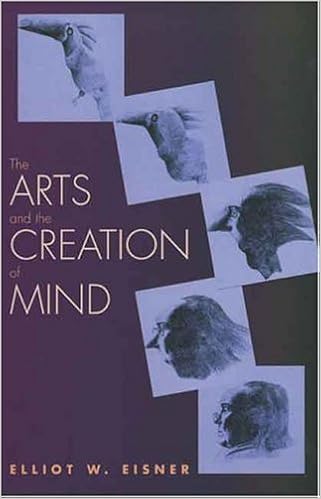
"The effects of teaching may not show up until long after students leave school and in ways the teacher never dreamed of." Elliot Eisner, The Arts and the Creation of Mind
How do you measure the true educational impact of a teacher? If you consult psychometricians, they say it is simple. You pre-test, deliver instruction, and you post-test. On this our "educational sciences" are based. But do these tests really measure the teacher's most important impact on students' lives? Is the most important task of a teacher to demonstrate that they can "improve a student's test scores?" And, equally important, no matter what our state and federal education bureaucracy tells us, "Are these state standardized test results really capturing learning that will be meaningful to those students' future lives, or are these results simply better predictors on how students will score on other standardized tests?"

Elliot Eisner's book, The Arts and the Creation of Mind depicts an image of a teacher that is much more complex and complete than that currently promoted by the "education sciences" to which modern education finds itself enslaved. The teacher is much more farsighted than the teacher who can't wait for the latest standardized test scores at the end of the year. Eisner's teacher is an "environmental designer" who "creates" situations and places where students gain "an appetite to learn."

Eisner's teacher is not a technician who uses "test data" to choose "canned scripts" and the latest adopted "scientifically validated methods and curriculum" whose purpose, is not to inspire wonder and imagination, but whose purpose is to make some education administrator or politician feel like they are effectively improving education. The teacher should not be teaching by following recipes; they should be engaging students in a "mind-altering curriculum" that forever changes them into forever learners.

What's wrong with the current grip that so-called "education sciences" have on schools is that they have created an impoverished, assembly-line form of education that students don't have to participate in; they only need to be subjected to it. Our education system still strives to run "smoothly," in a standardized manner and as efficiently as possible, and to get as many students through the credentialing process. It is short-sighted and its vision can't see beyond the "testing extravaganza at the end of the year.

But as Eisner makes clear in his book, if you really want "educational gold" in the classroom, then a "high-degree teaching artistry is needed. You need classrooms of "improvisation and unpredictability," not classrooms constructed according to rigid scientific principles. The teacher, in this innovative and creative classroom, is not a scientist who constantly studies the latest test data and looks at his repertoire of "research-based, scientifically-validated" classroom scripts for the one to apply because the data indicates it is called for. The teacher is what Eisner calls "a midwife to the child's creative nature."

As I look back at my years in elementary school, I see one teacher who I would really say was the midwife to my own creative nature. She didn't make noise about my performances on tests. She genuinely questioned and encouraged me when I showed curiosity in the solar system, astronomy, biology, tadpoles, frogs, and trees. She listened attentively when I read stories I had written aloud in class and encouraged me to write more. She encouraged me to read anything and everything I could get my hands on in our school library, even helping me get permission from the librarian to wander into and check out books from the "junior high section" instead of the elementary section where all six-graders were constrained. I read more books that year than perhaps in any other time of my life because of her. In a word, she designed an environment that helped me grow my curiosity and a massive appetite to learn that is still alive today.

My greatest concern with the Standards-Standardized-Testing-Research-Based-Accountability educational milieu we've created in our schools is the damage it is doing to students far into their futures. Does all this focus and obsession with test scores really matter in the lives of our students? The true impact we have on student lives is an impact that hasn't happened yet, and its an impact that can't be measured by standardized tests. My sixth grade teacher had no idea that the classroom environment she created would mean that I would become a teacher myself. She had no idea that I would become a principal. She also had no idea that my passion for reading, writing, and appetite to learn would stay with me the rest of my life.

Perhaps if we really want to focus on "student outcomes" we need to set our sights beyond test data and create places of imagination, creativity, and innovation where curiosity is treasured, learning is not just measured, but valued. Not everything worthwhile can be reduced to pre-tests and post-tests, and the real impact of our work with students will be measured by the lives they live far beyond the classroom.


Friday, August 15, 2014

Teaching Is Impacting Lives Forever Not Raising Test Scores

What the testing and accountability crowd does not get is the impact teachers have on lives. No bubble sheet can capture that, and you won't find it in standards. Each of us has a teacher or teachers that have impacted our lives. In my own, there was fifth grade with Ms. Case and sixth grade with Ms. Williams. Ms. Case captured my imagination in reading with Old Yeller which she read to us lovingly everyday. Ms. Williams encouraged me to explore my interests in the stars and science. These teachers fired my curiosity for learning and exploration. The impact teachers have on lives can't be measured using EVAAS, ACT, or SAT. As much as we would like to reduce teaching to numbers, it can't be done.

This video of a surprise party for a teacher of 40 years will move you to tears. In spite of the test score fetish our education leaders and politicians have, there are still teachers touching lives. Let's make sure that continues.


Saturday, September 21, 2013

Becoming an Authentic Teacher Instead of a Machine That Produces Test Scores

How can we avoid becoming robots in the classroom and in our school offices when all the talk is data, data, and more data? When all the educational buzzwords are the same words and language used to describe mechanistic processes, it is easy to lose sight of education as a process involving real people with real inner lives. To avoid becoming these automatons of a lifeless education system, we do need to take time to work on the inside too. No matter what your religious persuasion or lack of, teaching is ultimately an act of integrity and courage that pours as much from our hearts as our heads. How many times a day do I find myself caught up in messiness of administrating, only to lose touch with what's inside?

Yesterday, I shared much of  the following with my staff in my weekly email update. Parker Palmer, author of the inspirational book on teaching entitled, The Courage to Teach, talks at length about the importance of teachers, and I would add administrators, to being in touch with the teacher within. Teaching is an authentic, powerful experience that requires a level of authenticity. To be authentic, we must listen to the teacher inside us.

In an essay, entitled "Heart of a Teacher" Palmer asks the question:

"How does one attend to the voice of the teacher within?"

With this question he encourages teachers to make sure they tend to what's inside too. He says we can only touch students' lives when we ourselves are on "speaking terms" with this teacher within. To do that, we need to take occasions to listen inwardly. 

How can we learn to listen inwardly to the teacher within? This weekend, here's a few things to try:
  • Find some time for solitude and silence. We all need time to sit quietly and in silence so we can learn to hear the voice of the teacher within.
  • Meditative reading. We need to take the time to read things that inspire us, and that give volume to the voice of the teacher inside all of us.
  • Walking in the woods. This weekend take a hike, well, don't take that the wrong way. Take a walk in the woods. Give yourself time for inner reflection after spending the entire week of interacting outwardly.
  • Journal. Take some time this weekend to write. Give that teacher within a voice.
  • Finally, find a friend who will listen. There's nothing like a compassionate friend to help you reconnect to the teacher you are inside.
Palmer talks a great deal about the importance of teaching coming from our identity and integrity. We must be authentic with ourselves before we can ever be authentic with our students. This weekend take some time to get on speaking terms with your teacher within.

Thursday, August 8, 2013

Reminder in Midst of the Negativity in Education About What's Important!

Most of us have repeatedly been reminded by the media and politicians about how bad the state of education is in our country. They've blamed teachers. They've blamed teacher-education programs. They've blamed administrators. Usually, those who make those inferences base them on test scores, which we all know is only a small piece of what we're really about as teachers. In case you're feeling a bit down about what you do as a teacher and educator, perhaps this will provide you with a bit of an uplift in spirit. This video from the New York Times reminds us what is really important in teaching and in life.


Sunday, April 8, 2012

3 Lessons From the Dalai Lama on Being a Teacher

His Holiness, the Dalai Lama writes in the book In My Own Words: An Introduction to My Teachings and Philosophy:
“As children grow older and enter school, their need for support must be met by their teachers. If a teacher not only imparts academic education, but also assumes responsibility for preparing students for life, his or her pupils will feel trust and respect, and what has been taught will leave an indelible impression on their minds. On the other hand, that which is taught by a teacher who does not show true concern for his or her students’ overall well-being will not be retained for long.”
Educators teach students not subjects and not grade levels. That statement has obviously been repeated so much that it is now a bit of a cliché, yet it is still profoundly true. Even the words of the Dalai Lama seem to advocate for teachers of students in the words above. As His Holiness points out, there is no teaching, hence no learning without compassion. It is literally impossible to teach students and not care deeply about their welfare and support. As instructional leaders, here's three lessons for teaching from the Dalai Lama.
  • Teachers have a responsibility to support the children they teach. There is no escaping this responsibility. Those who want to teach the young must care for them. To support our students means we care about more than just their ability to get high test scores. It means providing them the emotional support they are sometimes not getting at home. It means being there for them emotionally, when no one else can. Unfortunately, that is not something objectively measured through value-added statistics and multiple choice tests. How can compassion be reduced to some rating scale?
  • Teachers have a responsibility to not only teach the academics, but also prepare students for life. If we really want our teaching to have a long-term impact on the lives of our students, we must assume the responsibility of providing them with the preparation they need for life. By default, a willingness to prepare those we teach for life signifies compassion for who our students are and where they’re going. Preparation for life should be more than test scores. It should be more than success measured by money and financial status. It should be more than success measured by educational attainment. Preparing students for life means we equip them to become compassionate citizens of the 21st century.
  • Teachers who teach without compassion are ineffective. Forget value-added measures and teacher evaluation systems. Without compassion, none of those things matter. If you want to see an effective teacher, look at the level of concern they have for their students. If you want to see an ineffective teacher, look for a teacher who sees students as test scores and an opportunity to earn a bonus. That’s the whole problem with merit pay. It appeals to greed and “what’s in it for me” not necessarily what’s good for the children. Compassion should be the teacher's primary motivation, not greed.
The greatest lesson from the Dalai Lama's teaching is that those who would be the greatest and most successful teachers are those who have compassion in their hearts not themselves.

Saturday, September 10, 2011

Teaching Is a Business of the Heart


NOTE: I included this segment in my weekly staff email update for this past week. Writer Parker Palmer has so much to say about the importance of taking care of the inside as we go about the business of being educators. I hope readers will find these words helpful.

Celebrated author of the book The Courage to Teach once wrote:

"We became teachers of the heart, animated by a passion for some subject and for helping people to learn. But many of us lose heart as the years of teaching go by. How can we take heart in teaching once more, so we can do what good teachers always do---give our heart to our students? The courage to teach is the courage to keep one's heart open in those very moments when the heart is asked to hold more than it is able, so that teacher and students and subject can be woven into the fabric of community  that learning, and living, require."

There is not a one of us standing in our classrooms today who did not become teachers for the two reasons Parker Palmer describes. We became teachers either out of love for a subject or a love to help others find the joy of learning. In the busyness of the birth of this new school year, it is so easy to get caught up in events and incidents that drive our days that we forget the true inner passion inside ourselves that made us teachers. Palmer repeatedly admonishes us to look back inward to recapture the spirit of what we do. He tells us that teaching is one of those callings that can't become just a job, it involves body, mind and soul. When we stand authentically in front of our students, we are teaching with all of ourselves. We are, as Palmer says, "Giving our hearts to our students," and that's why it truly takes courage to teach.

In the coming year, I challenge all of us, including myself. As Palmer suggests, let's reconnect with who we are, teachers. That is an inseparable part of our identity, because it is our passion. We must reclaim the relationship we have with the teacher within us, and with integrity build relationships and open our hearts to our students. That is the courage to teach and we all have that.

Thank you everyone for your tireless efforts in the beginning weeks of this school year to tackle the most important reason why we are hear, our kids. Through countless examples every day, you demonstrate to me that you have the "main thing" in focus and as a priority.

For an inspiring read about teaching, check out Parker Palmer's "The Heart of a Teacher: Identity and Integrity in Teaching" at this web address: 

Saturday, July 9, 2011

Is Education Your Job, Your Career, or Your Calling?

In his success psychology book entitled The Happiness Hypothesis: Finding Modern Truth in Ancient Wisdom, Jonathan Haidt states that there are three ways people approach their work. People approach their work as a job, a career or as a calling, and their approach often determines their attitude and level of commitment to that work.

Those who approach their word as a job, "do it for the money." They are the "clock-watchers" who eagerly look for "quitting time" and daydream about what their weekend is going to be like. Most of these individuals seek greater fulfillment and engagement outside of their work.

Those who approach their work largely as a career, have the larger goals of advancement, promotion, and prestige in mind. These individuals according to Haidt, are energized by the pursuit of these goals. Sometimes, these individuals would be likely to take work home and do it themselves to make sure it's done properly all in the name of advancement.

Finally, those who approach their work as a calling, find their work in intrinsically rewarding. These individuals are not engaging in the work to achieve something else. They do the work because they are engaging in something that contributes to the greater good (This sounds a great deal like Daniel Pink in Drive.) Pink talks about the importance of feeling a part of something larger than yourself when engaging in work. Perhaps those who see work as a calling definitely see their work as much more important than those who see it as a "way to make money" or as a "way to get promotions or prestige."

The truth is probably not that clear. Most individuals probably engage in their work with just a bit of all three of these approaches, but we certainly would like to think that our work as educators rises to the level of a "calling." Yet, we still have current policymakers and education reformers who believe that the promise of money,  of a promotion, and of prestige is all that is needed to improve our schools. In their efforts to "reform" the system, they need to beware of destroying the nobleness of teaching by forgetting that teaching is also a calling. Sure, teachers want to be compensated well for what they do, but it is true ignorance to think that pay is all that matters. For me, education was and remains a calling, and that is non-negotiable. I became a teacher because being a teacher is engaging in the most important work there is. Teaching is by definition a work that engages in something that contributes to the great good of all. Perhaps there is truth our policymakers can learn from Jonathan Haidt's book The Happiness Hypothesis

Wednesday, May 18, 2011

Teaching: From Author Pat Conroy's Experience

When you tell someone you were once a high school English teacher, that person often asks, "Who's your favorite author?" Or, "What's your favorite book?" I never hesitate; my immediate answer is Pat Conroy. I stumbled upon his book The Lords of Discipline and The Great Santini while in college and have never turned back. I can honestly say I have read every word he has put down on paper. But, there was one of his books I read back in the 1980s that was an inspiration for me in my becoming and staying a teacher. That book was The Water Is Wide. This book was based on his experiences teaching school on Daufuskie Island, just off the coast of South Carolina.  His attempts to introduce the kids of Daufuskie Island to the world beyond have always inspired me in some way to believe that "Teaching is undoubtedly the noblest profession of all and our job is to reach out to kids no matter what."

In the video below, Pat Conroy says of his time as a teacher, "Our job is to grab kids and set'em on fire." That's what true teaching is about. This book will inspire you to reexamine what is most important about what teachers do every single day.