Showing posts with label 21st century education models. Show all posts

Tuesday, July 23, 2013

Powerful Opportunities for Content Creation & Publication in the Digital Classroom

I began teaching in 1989. My first classroom didn't have a phone in it and the prime piece of technology I had was one of those old fashioned turntables. I remember using that to share my love of blues music with students by playing a Muddy Waters album for them in connection to a short story we were reading. I had a cassette tape player too, and I remember sharing a dynamic dramatic reading of Edgar Allan Poe’s poem “The Bells” using this device. I also had access to a VHS player, and I remember sharing scenes from the movie Roxanne with my students as we read the play Cyrano de Bergerac. That was the extent of the technology in my classroom at the time, and yes I did have a chalkboard and colored chalk that students enjoyed using to share drawings and messages on my chalkboard throughout the day.

But the point of this trip down memory lane was not to tell you how old I really am. It was to simply say this: Technology when I began teaching in 1989 seems quaint and unsophisticated now, but even at that time, I pushed the limits of teaching and learning with the tools that were available. I used the technology, not for its own sake, but because those were the tools that helped me teach in the most engaging and effective manner. In a sense, that mindset is really the same mindset of a 21st century teacher.

Engaging students in my 1989 classroom and in a 21st century classroom presented the same challenges. I found myself trying to answer these kinds of questions then, and also in the 2006 when I began to heavily engage students in the use of digital technologies.
  • How do you engage students who are more interested and engaged in things outside of school than inside it?
  • How can I make the best use of technologies to both engage students in my content and teach them to make the most of the technologies themselves?
  • How can my instruction best prepare students for a world outside of my classroom and school?
These questions are just as relevant now as they were then.

But here in 2013, digital technologies offer ours students so many more opportunities to learn in ways extending beyond the four walls of the classroom.. Here's what students today can do:
  • Students today can be publishers of content. In 1989, it was a struggle to find ways for students to publish content. It was usually limited to either making physical copies and distributing them or posting on classroom walls. Today, blogs and content sharing platforms make it possible for students to publish for global audiences. Publishing content has become cheap and efficient in our digital classrooms.
  • Students today can easily create multiple types of media content. During classes in 1989, my students were mostly relegated to creating content that was either textual or graphic, with the graphic content mostly being freehand drawings. Collages were also common. In today’s digital classrooms, students can still create text, but the tools to create video, photos, audio have all become prolific and easy-to-use. Students in today’s digital classrooms have power tools of multi-media content creation at their fingertips.
  • Students today have many, many more choices of the kinds of content they can create, hence they are not limited to the research paper or dioramas (Anyone remember these?). In 1989, most of my students content creation was mainly writing papers, creating collages, making drawings, writing/acting out original plays, or creating other kinds of genres. Today’s students have new forms of textual media, new forms of graphical communication tools, and new ways to engage audiences digitally. Students in today’s classrooms can create their own apps, web pages, blogs, vlogs, with the whole global community being the limit.
For those of us who began teaching in the late 1980s, the classrooms of today offer our students so many more opportunities to engage in content creation, content publication, and content sharing. In spite of this, the fundamental educator mindset is the same. In 1989, to create an engaging classroom, I made the most of tech tools I had then. In 2013, that tech toolbox has expanded enormously, so teaching and learning through content creation and publication has expanded as well. It's this wonderful 1989 perspective of teaching and learning that makes me appreciate the greater possibilities of the 21st century classroom.

Tuesday, July 2, 2013

4 Trends of Global Connectivity We As Educators Can No Longer Ignore

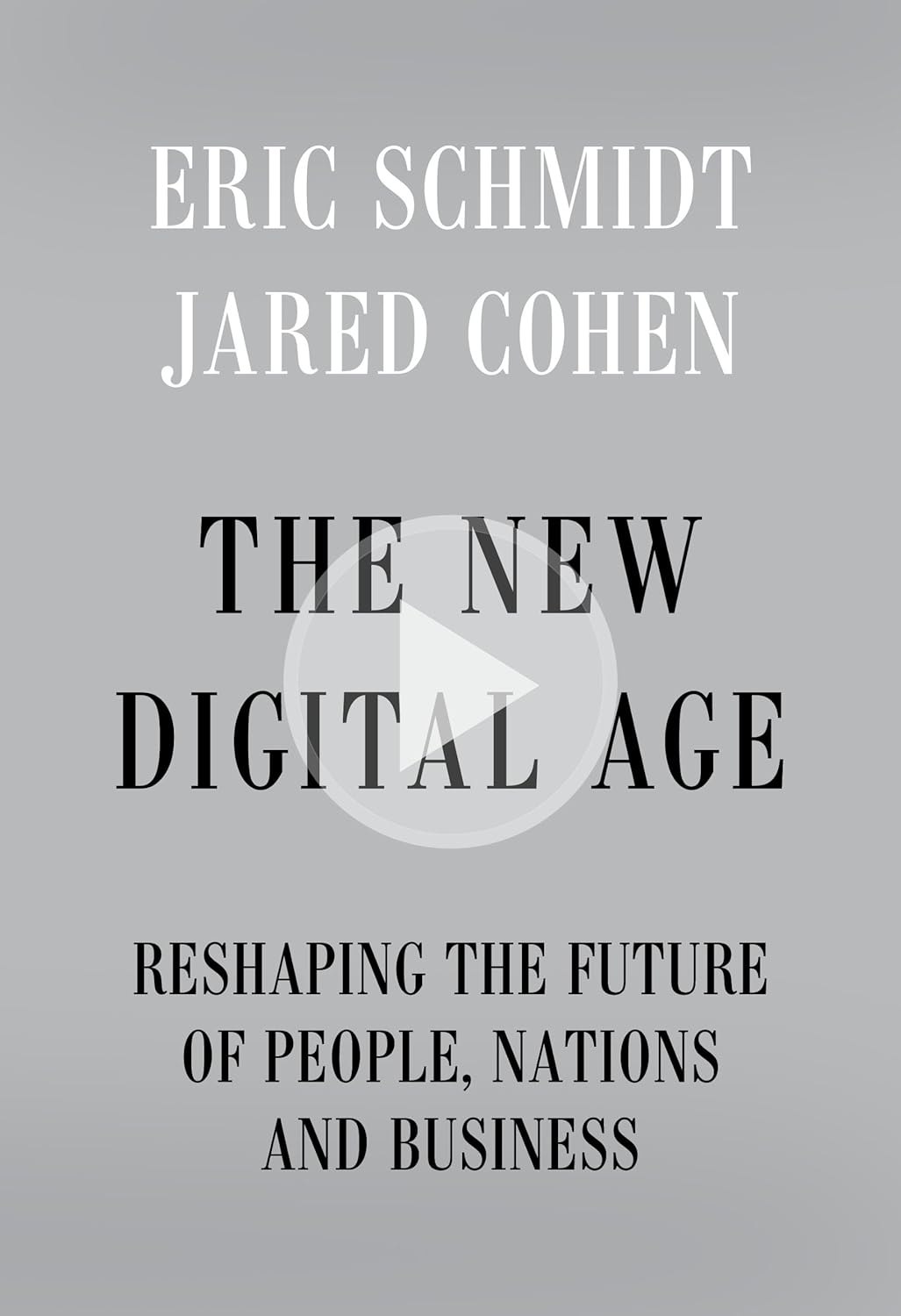
“As global connectivity continues its unprecedented advance many old institutions and hierarchies will have to adapt or risk becoming obsolete, irrelevant to modern society.” Eric Schmidt & Jared Cohen, The New Digital Age: Reshaping the Future of People, Nations, and Business
Even a decade into the 21st century, educational leaders and policymakers stubbornly hold on to an outdated, twentieth century manufacturing education model with its standardized approach to teaching and learning. Little discussion has been about how can we redesign teaching and learning; instead, we are still bolting on new and recycled reform measures to an old model of education that has proven inadequate for all students. The search for the perfect test or set of standards that has the power to magically transform education continues. It's as if in some ways, there's still little incentive to change, but as Schmidt and Cohen point out, the power of "global connectivity" continues to force its way into our institutions and our lives, and the question is adapt or be irrelevant.

What education leaders and policymakers really fail to see are Four Big Trends of Connectivity that Eric Schmidt and Jared Cohen describe in their book, The New Digital Age: Reshaping the Future of People, Nations, and Business. According to these authors, these trends are at work, powerfully transforming our public institutions whether we want them to or not. Education leaders have spent much of the first decade of the 21st century either resisting these trends, trying to adapt them to old models of schooling, or trying to ignore them, perhaps even hoping they're some kind of fad that will fade with time. But these four trends are creating stress on all our public institutions, according to Schmidt and Cohen. Their impact on education is continuing as well.

1. Quicker rate of change than at any time in history. According to Schmidt and Cohen, “We experience change at a quicker rate than any previous generation, and this change, driven in part by the devices in our own hands, will be more personal and participatory than we can even imagine.” This handheld-device driven change has already began impacting education. Schools have yet to really harness the power of these devices and connectivity, because they mostly have only been asking questions like: "How can I control these devices which are a nuisance?" or "How can these devices help us do the teaching and learning we now do?" For schools to capitalize on this quicker rate of change, our educational institutions and the people in them must become much, much more flexible. They need to recognize the personal and participatory nature of learning and move away from a “prescriptive philosophy of teaching” where education is perceived to be a “treatment” provided to produce a desired result. In the “quick change” environment of the future, individuals will take charge of their own learning, and prescription learning will be history. Personalized learning will result from the quicker rate of change.

2. Seamless permeation of technology everywhere. In spite of their efforts to keep devices and technology from their buildings, school leaders are losing this war. As Schmidt and Cohen point out, "In the future, information technology will be everywhere, like electricity. It will be a given, so fully part of our lives that we will struggle to describe life before it to our children.” In that same future, educators will be surrounded with technology. Questions like, “What do we do with these devices?” or “How do I use this in my classroom"?” will completely vanish. Technology will “just be” part of how we do education and life. It will be seamlessly part of every aspect of teaching and learning. In that future no one will question or even notice the technology.

3. Attempts to try to contain or restrict connectivity is futile. “Attempts to contain the spread of connectivity or curtail people’s access will always fail over a long enough period of time---information, like water, will always find a way through,” state Schmidt and Cohen. No matter how institutions try to to control access, it will happen anyway. Since the age of connectivity began school leaders have been trying to control connectivity on their terms, which is like trying to control the output from a fire hose. Many still don’t get it; that this torrent of content, wanted and unwanted can’t be contained or restricted. Like the printing press, once information begins spreading, ideas and information spread. Instead of futilely trying to restrict or contain the torrent, we need to provide our students with the values necessary, the moral and intellectual center to engage connectivity appropriately and effectively.

4. Permeation of connectivity and mobile technologies means power moves away from the few to many. The final big trend described by Schmidt and Cohen involves a power shift. As they point out, “With the spread of connectivity and mobile phones around the world, citizens will have more power than at any time in history, but it will come with costs, particularly to both privacy and security.” The power of teachers being the “primary dispensers of information” to our students has slipped away. This shift continues unabated, and if students really need content experts, they don’t need teacher-content experts any more. They can connect with those using the devices in their hands. Students need guides and mentors to help them navigate the global world of information available. They need connectivity experts. They need simply, those who will help them make sense of information, evaluate it for relevance and validity, and use it solve real problems.


Judging from these four trends described by Schmidt and Cohen, schools as public institutions have little choice in adapting to the changes wrought by global connectivity. I fear, though, we're still too busy trying to adapt the technologies and global connectivity to fit our old ways of teaching and learning.

Wednesday, November 28, 2012

5 Principles That Make Outdated Educational Practice Impossible

Last night, the #edchat topic was, "How should teachers deal with colleagues who are comfortable with 19th century and punitive measures for non-compliant students?" Judging by the responses, many teachers either felt they could gently prod this colleague to changing his or her practice. Others did not see this their responsibility at all. They saw it as the responsibility of the administrator.

At first glance, I would agree that the administrator does have the responsibility to address the issue of teachers using outdated practices. However, I think the real solution is a bit more complicated and can be captured with another question: How can a teacher engaged in outdated pedagogy and practice possibly exist in a true 21st century school? Should the school environment not be so innovative and challenging that such teaching is impossible? Perhaps the real problem is that we have been fooling ourselves into thinking our school is a "21st Century School" when it's not. Just maybe our school systemically allows teachers to continue do what they've always done and avoid growing personally and professionally. 

As long as you have a school, school district, and school system that allows people to use "outdated methodology in instruction and educational practice" such practices are going to exist. In other fields such as medicine, obsolete practice is rooted out by a culture that values innovation and pushes out obsolescence. Why can't schools foster that same kind of culture?

What would a school or school district that has a culture that makes obsolete educational practice impossible look like? What are the operating principles? Here are some ideas to start with.

1. A strong expectation of personal and professional growth permeates the school and school district environment. Everyone, beginning with leadership, are lifelong learners, and their every action is focused to that end. There's an attitude of perpetual learning and professional development surrounding everything that is done.

2. The school and school district culture values risk-taking more than playing it safe. Valuing risk-taking takes courage from leadership and everyone else. It means accepting failure as part of learning. Leadership that values risk-taking can't ask others to take risks if they themselves aren't willing to do so.

3. Leadership in the school includes more than the principal. When the leadership includes strong teacher leadership, it is difficult for those not growing professionally to exist. Teacher leadership means there are peers pushing those teachers to develop professionally.

4. Collaboration among staff is the norm. When issues and problems and challenges are viewed as "our issues/problems/challenges" then everyone is expected to be a part of the solution. This means those who are hanging on to outdated practice find it more difficult to do so. Their colleagues are pushing them to take ownership of the school's future and they can't continue to exist in their tiny isolated compartment within the school.

5. There's a strong sense of entrepreneurship among staff regarding the school. They feel that it is "their school." Staff who feel this aren't just provided a token opportunity to give feedback on School Improvement Plans. They have a say in the direction and focus of the school because it is genuinely their school too. Teachers engaged in obsolete practice can't continue to operate in an obsolete manner because colleagues push them to do better.

So, in answer to last night's #edchat question, "How should teachers deal with colleagues who are comfortable with 19th century methods and punitive measures for non-compliant students?" I submit that the answer isn't just a question of what the teacher should do or what the principal should do. It is a systemic problem that can only be addressed by creating places that make obsolete educational practices impossible. It's a question addressed by creating a school or school district culture that will not tolerate obsolete educational practice.

Tuesday, October 23, 2012

Indicators of a World-Class 21st Century Education System

With all the talk about having a “world-class education system” from politicians and policymakers, one would think that our schools would be undergoing major reforms designed to create exactly the kinds of schools that foster 21st century learning and education. Too often though, I suspect this isn't the case, because these individuals define “world-class” as simply “having the best test scores in the world” because in their next breath they lament just how poorly American students compare with other international students on tests like the Program for International Student Assessment (PISA). To many of these individuals, this equation seems to apply:

WORLD CLASS EDUCATION SYSTEM = HAVING HIGHEST TEST SCORES IN WORLD

Without a doubt, many of these politicians and policymakers define “world-class” in ways that clearly create “world-class schools” better fitted for the Industrial age where factories and assembly lines were the ultimate destinations of students. These so-called “world class education systems” are, to put it bluntly, schools that churn out “good test scores.”  In a word, a world-class education, in their eyes,  is still about an education done to students rather than something in which they engage in.

Because of this view of “world-class education systems” our politicians and policy-makers, we continue to tweak the edges of our education system instead of really finding substantial ways to reform our education system.
  • We develop new standards and new tests, thinking that if only the hurdles were higher and the measurements tougher, then we would have a “world-class education system.
  • We extend the school day, thinking that only if we subjected our students with more of the same for longer periods of time, we would have a world class education system.
  • We add technology to our schools to help us teach like we have always have done, instead of allowing the technology to help us rethink learning and teaching.
  • We toughen or change graduation standards every four years when new at the whim of the next politician in office, whose thinking is that if we only change the ingredients of our graduation mixture, we would have a world class education system. 
In a word, we continue the same cycles of reform and deform that began with the Sputnik declarations in the 1950s and 1960s, because we can’t let go of a fundamental deeply held belief that education is something done to students rather than something they engage in.

If we were to be honest with ourselves and sincerely asked the question, “What does a truly world class education system for the 21st century look like?” we need to look further than higher test scores.
  • A “world-class” education system is about educating students to tackle 21st century issues, not about achievement test scores.
  • A “world-class” education system engages students in authentic learning experiences, not standardized learning experiences.
  • A “world class” education system actively engages students in their own learning, and does not have them sit passively in classrooms, waiting for the content to be delivered to them.
In his latest book, World Class Learners: Educating Creative and Entrepreneurial Students, Yong Zhao provides a thought-provoking list of indicators of a world-class education system. According to him,  we don’t need 21st century schools that churn out “acceptable” test scores like the 20th century schools. We need 21st century schools that foster creativity, entrepreneurial thinking, and innovation. Here are “Eight Indicators of World-Class Schools” adapted and paraphrased from Zhao’s book.

1. A world class education system gives students the “right and opportunity” to participate in school governance, and in constructing the physical, social, and cognitive school environment. Zhao points out the dictatorial nature of our current education system. It seeks to dictate exactly what every student should learn, without regard to her interests or talents.  Students aren't provided opportunities to have any say in their own learning. The whole idea of “educating students” is something done to them, and they are passive participants. In a world-class education system they have a say in their own learning. They participate in the development and construction of their own learning and places of learning. In a word, they are empowered to take ownership of their own learning.

2. A world class education capitalizes on student engagement by giving students a curriculum that is broad and flexible. The curriculum gives students the freedom to pursue their own interests and the development of their own personal talents, rather than creating standardized workers capable of all performing the same tasks. Our current education still seeks to narrow the curriculum and make it rigid. The belief that there are a list of skills and talents every student should have drives a curriculum narrowly focused on skills and talents subject to standardized testing. A world-class education system has a broad, flexible curriculum that can be individually tailored to the interests, talents, and abilities of each student.

3. A world class education system provides personal support for each of its students. Our traditional schools were and still are still set up to deliver an assembly-line education in a standardized manner. A true world-class education system provides what Zhao calls sufficient and accessible “emotional, social, and cognitive support for students so they can personalize their own learning.” All students are connected to at least one significant adult in the building. A world-class education system personalizes each student’s education through a solid system of support.

4. A world class education system engages students in authentic learning experiences that ask them to create authentic products of learning. In our current traditional system of education, students still spend a great deal of their learning time engaged in inauthentic activities involving worksheets, textbooks, and standardized tests. Instead, students in a world-class education system are engaged in learning where student work is defined as authentic and real-world. A world-class education system engages students in 21st century learning tasks that are authentic and personally meaningful.

5. A world class education system engages students in a sustained and disciplined process of learning. In the old traditional education system, students basically complete their work. The teacher grades it and gives it back. In a world-class education system, students are engaged in a learning process that asks them to develop, review, evaluate and revise. In this kind of learning, students are clearly engaged in more that finding right answers and giving them to the teacher. They are engaged in a world-class education that asks them develop, evaluate, revise, and promote products of their learning.

6. A world class education system capitalizes on the local strengths of its students, teachers. A world class education system takes advantage of the locale of its schools, and it effectively taps into community resources. The schools' teaching reflects the strengths of its teaching staff. The system provides ways for both teachers and students to exploit their own talents and interests.  A world class education system seeks not to standardize, but to make the most of both its students and teachers in all learning.

7. A world class education system has a world orientation. This means simply, that the school operates from a global perspective, not the narrow perspective of local community or even country. World-class schools seek international partnerships, and students are engaged in learning involving global issues. In addition, students are engaged in frequent interactions with students from other countries. In other words, a world-class education system moves students and their learning beyond the walls of their classrooms and even the borders of their country.

8. A world class education system develops the global competence in its students. Global competence refers to the ability of students to interact with others from different cultures. This means in world-class schools, foreign languages and cultural learning are important. It means students have opportunities to interact with these foreign cultures either through the use of technology or through field trips. In other words, a world-class education system provides opportunities for students to experience other countries and cultures in engaging and relevant ways.

Having a world-class education system is more than having one where decision makers can have bragging rights to the highest scores in the world. Ultimately, a world-class education system focuses on student engagement, student choice, personalization, authentic learning, global perspective, and global competence. Unfortunately, these are things that often make education messy.