Showing posts with label classroom instruction. Show all posts

Wednesday, June 18, 2014

Resources from ASCD for Creating a Positive Classroom Culture

Alexandria, VA (6/17/2014)—ASCD, a global community dedicated to excellence in learning, teaching, and leading, is pleased to present a variety of professional development resources that support educators in creating a positive classroom culture. The collection of ASCD books and online resources supports all educators in improving their school culture and furthering their school’s continuous growth and achievement.
A positive classroom culture is essential to supporting the whole child and ensuring that each student is healthy, safe, engaged, supported, and challenged. By using these resources, educators can set the standard for comprehensive, sustainable school improvement and create long-term student success.

Professional Development Books
How to Create a Culture of Achievement in Your School and Classroom—Teacher leaders Douglas Fisher, Nancy Frey, and Ian Pumpian believe that no school improvement effort will be effective unless school culture is addressed. Drawing on their years of experience in the classroom, they identify five pillars that are critical to building a culture of achievement. In addition, they provide 19 action research tools that will help educators enable success for all students.

Simply Better: Doing What Matters Most to Change the Odds for Student Success—McREL expert Bryan Goodwinpresents a practical, research-based framework for improving student achievement and identifies five essential practices that can vastly increase students’ chances of succeeding in school. Whether at the district, school, or classroom level, educators will find a valuable blueprint for turning knowledge into visible results.

PD Online Courses
Bullying: Taking Charge, 2nd edition—In this second edition PD Online Course, educators will learn practical tools for confronting and preventing bullying. Through video examples, in-depth readings, and problem-solving scenarios, users will learn how to recognize and detect bullying, address bullying with the bully as well as the victim, discuss bullying with students through classroom activities, and implement a communitywide bullying intervention program.

Embracing Diversity: Effective Teaching, 2nd edition—Through this PD Online Course, participants will consider the importance of building respect for racial and multicultural diversity, as well as how to combat gender and sexual bias through curriculum activities. Educators will explore ways to build learning environments that embrace diversity and learn practical tools for building respect for all students.

PD In Focus
The Art of Science of Teaching—This PD In Focus® channel presents a comprehensive framework for effective teaching that consists of three major focus areas and ten design questions, all of which are powerfully interconnected as part of the art and science of great teaching. 

Visit www.ascd.org/pdinfocus to browse all PD In Focus channels.
To learn more about ASCD’s professional development offerings that support classroom culture, visitwww.ascd.org/pd. For more information on ASCD’s other programs, products, and services or to join ASCD, visitwww.ascd.org. 

Sunday, August 26, 2012

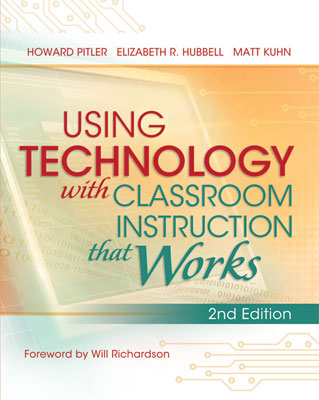
Engaging Students with High Yield Teaching Strategies and Technology

“Our students must learn not only how to use current technologies, but also how to evaluate which ones work best for particular tasks or projects,” write Howard Pitler, Elizabeth R. Hubbell, and Matt Kuhn in their latest edition of Using Technology with Classroom Instruction That Works, 2nd Edition. In the digital age, that is the crux of our instructional problem: how do we give students the experiences with digital technologies that make them effective consumer-users? And, how do we do this without being technologically-tool centered, when the tools so rapidly change? Pitler, Hubbell, and Kuhn offer one effective approach: focus on the instructional methods that work, and then engage students in using technology while employing those research-based instructional strategies. Using the high-yield instructional strategies found in the book Classroom Instruction That Works, the authors show how technology might be employed in the service of using each of these instructional strategies:
  • Setting Objectives and Providing Feedback
  • Reinforcing Effort and Providing Recognition
  • Cooperative Learning
  • Cues, Questions, and Advance Organizers
  • Nonlinguistic Representations
  • Summarizing and Note Taking
  • Assigning Homework and Providing Practice
  • Identifying Similarities and Differences
  • Generating and Testing Hypotheses
Using Technology with Classroom Instruction That Works takes readers through each of these high-yield instructional strategies and then points out specific kinds of technologies that lend themselves to helping teachers engage in those teaching strategies. For example, Identifying Similarities and Differences is a strategy that research says brings  the highest levels of gains in student achievement. Pitler, Hubbell, and Kuhn’s book gives educators ideas on how  to engage students in the use of this instructional strategy through the use of different categories of technological tools. At the same time, the authors offer readers many examples of how practicing teachers are using those technologies in the manner they describe. The categories of technologies these authors focus on include:

  • Word Processing Applications
  • Organizing and Brainstorming Software
  • Data Collection and Analysis Tools
  • Communication and Collaboration Software
  • Instructional Media (Learner as Consumer)
  • Multimedia Creation (Learner as Producer)
  • Instructional Interactives
  • Database and Reference Resources
  • Kinesthetic Technology

Using Technology with Classroom Instruction That Works is not a "how-to" book when it comes to employing technology in the engagement of instruction. Rather, it is a "big-picture" book that surveys the field of technological tools and helps the teacher connect with the kinds of technology she might wish to use in the classroom. Educators in the classroom up to district leaders, who are interested in what kinds of tools teachers and students can use with research-based instruction, will find this book quite useful.